

Founder’s note
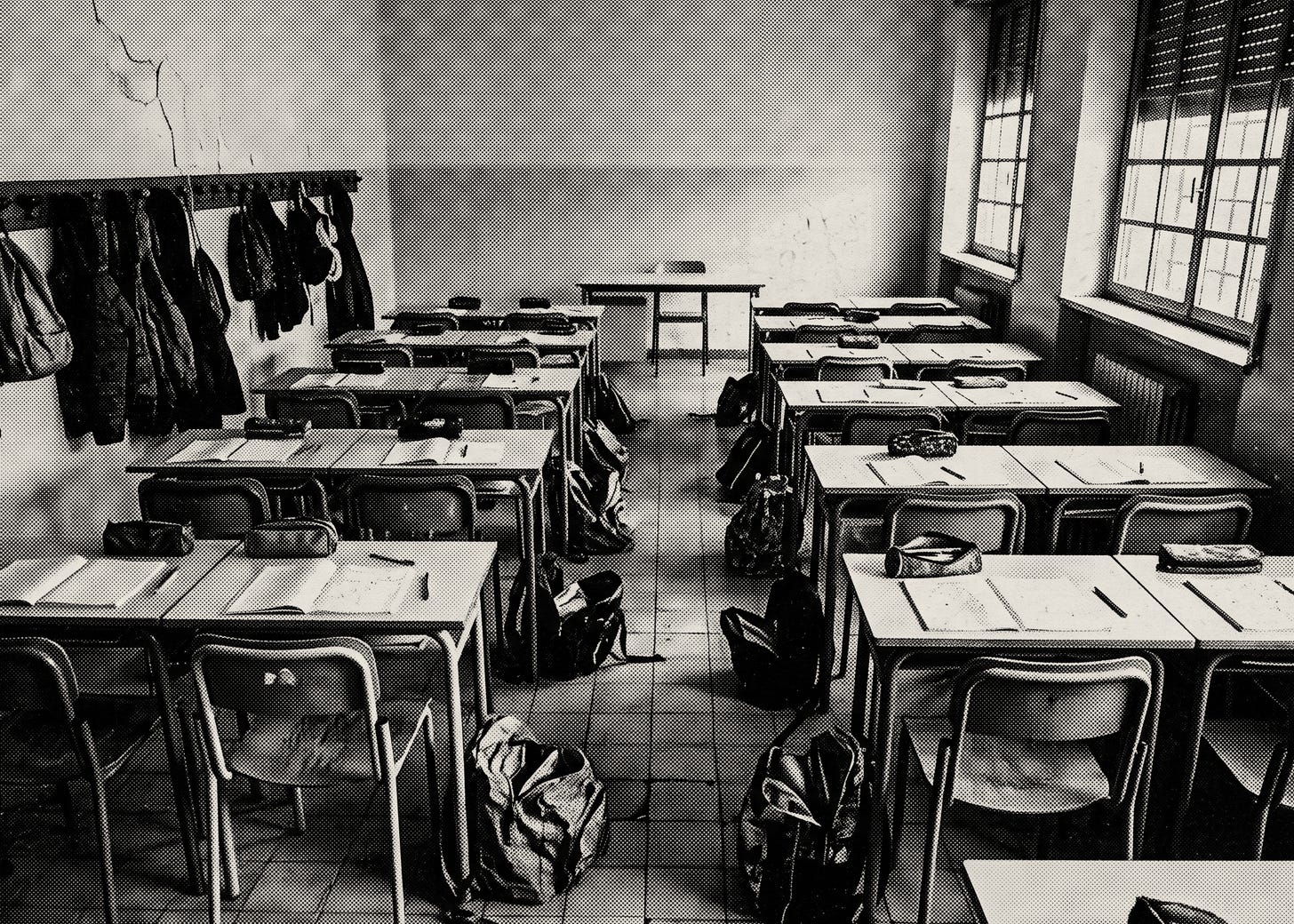
Our school results came out last week. Fifteen-year-olds do the same test all over the world, and ours are the worst they have ever been.
The education minister, Yoav Kisch, says it’s the war. Schools shut, towns emptied, and the fact that it held together at all is an achievement. But plenty of people writing this week said it had already fallen apart long before the war.
I thought I knew why. A quarter of our first-graders are in Haredi schools that don’t teach math or English, so of course the average looks terrible. Then I looked at who actually does this test. Haredi boys’ schools mostly refuse to take part, so they’re barely in the sample at all. And the Haredi girls who did it scored well.
So it’s not the Haredim, it is our ordinary schools, the ones most of us send our kids to.
The left says it’s because of the funding. We’re not short on teachers, we’re short on money. A class here is thirty-one kids, in most of the developed world it is twenty-three, and a teacher here earns less than a teacher anywhere comparable, at every stage of the job. Pay that little, in front of that many children, and of course nobody qualified comes.
The right says the money is not the problem, the union is. The ministry once offered two hundred special contracts to get strong graduates into teaching positions and eight hundred people applied. It was cancelled, because the head of the teachers’ union didn’t want to create “two classes” of teachers. The scheme that replaced it signed up thirteen people in the whole country.
Both sides have a hole. If it’s only the money, who were those eight hundred? And if it is only the union, break it up and you still have thirty-one kids in the room and wages no one qualified takes.
So now there are chemistry graduates in Israel who applied to be teachers and never heard back, and classes of thirty-one kids whose science teachers never studied science.
Whatever gets decided, it’s too late for the children already in those classrooms. I hope these upcoming elections will change something, for our kids’ sake.
Shabbat shalom,
Josh Ben-David
Founder, Daily Lion

The fight over the Emirati warning
Reports that the Emirati president phoned to warn of an impending attack two weeks before October 7 drew denials and legal threats from the prime minister. For the right, the leak looks like security officials deflecting blame. On the left, it confirms neglected warnings. The claim changes few minds among entrenched voters, leaving the fight over an independent commission unresolved.
The midnight purge in Degel HaTorah
Degel HaTorah ousted its veteran leader Moshe Gafni in a midnight shakeup, replacing him with Yaakov Asher without changing the party platform. The move lands just as the High Court ended the draft freeze and police began arresting yeshiva students. New splinter factions are organizing around employment and integration, testing whether swapping party bosses can calm voters who feel unprotected by the traditional leadership.
Evicting the unauthorized outposts
The prime minister ordered the military to dismantle unauthorized settler outposts in the West Bank following direct pressure from Washington. Yet ministers inside the cabinet openly champion the outposts, and police rarely prosecute the settlers who build them. The eviction order eases diplomatic tension with the United States, but actual enforcement remains stalled in a government split over who holds authority on the ground.
The math of the candidate lists
Thirty-eight parties filed candidate lists before the deadline, leaving every faction racing to clear the 3.25 percent electoral threshold. Opponents of the government consolidated their slates, but several allied factions refused to merge despite personal pressure from the prime minister. A governing coalition needs 61 seats, meaning a single splinter list falling just short of the cutoff could wipe out a parliamentary majority.
DEEP DIVE
Funding the fracture of Israeli state education
The 1953 State Education Law was meant to build a common civic identity, but decades of coalition bargains steadily shifted the schools toward religious control. Across the mainstream system, national testing was dismantled under union pressure just as basic math skills collapsed. The dive walks through who actually sat for the international exams, how private religious networks draw full state budgets without teaching core subjects or hiring certified instructors, and the court battles freezing the money. It looks at the teachers facing surveillance for political speech and the municipal fights keeping children apart.

Closing the British consulate
Britain barred imports from West Bank settlements, prompting Israel to order the closure of London’s East Jerusalem consulate within thirty days and expel British diplomats from Gaza aid operations. The trade restrictions carry minimal economic weight, yet they threaten the livelihoods of twenty-five thousand Palestinian laborers while severing decades of bilateral cooperation. The British bans take months to enact, but the diplomatic infrastructure is already being dismantled.
Opening an embassy in Ljubljana
Israel opened an embassy in Slovenia, reversing years of tension after a new right-wing government in Ljubljana repealed settlement import bans and scrapped plans to penalize Israeli leaders. Jerusalem gained a reliable partner inside the European Union to push back against coordinated Western trade restrictions. Yet diplomatic goodwill in a small capital cannot protect Israeli supply chains once larger European economies enforce their own boycotts.
Trapping Gulf oil exports
Houthi forces seized Yemen’s Red Sea port of Mocha just as drone strikes shut down Saudi Arabia’s 1,200-kilometer east-west pipeline, leaving Riyadh with under a week of oil reserves at its primary export terminal. Washington declined direct military intervention, offering only intelligence assistance instead. Without American air power to secure the waterway, Gulf capitals face the dilemma of absorbing repeated strikes on their energy networks or pursuing direct diplomatic accommodation with Tehran.
Closing the Syrian dossier
The United Nations nuclear agency closed its long-running investigation into Syria’s clandestine reactor program after the country’s new authorities granted inspectors access to two undeclared sites. The inspections uncovered 73 metric tons of natural uranium metal, which Damascus agreed to keep under monitoring rather than surrender. International diplomats celebrated the restored access, but the compromise leaves a massive stockpile of nuclear material sitting inside an unstable country with no plan to remove it.
Grounding the Iranian fleet
The United States sanctioned 27 Iranian airlines to isolate the country’s aviation sector, while international inspectors referred Iran to the United Nations Security Council for blocking access to 22 nuclear sites. Russian and Chinese vetoes make new international penalties unlikely, and American sanctions bypassed the Houthi forces currently closing the Red Sea. The diplomatic and economic pressure is mounting, but more than 9,000 kilograms of enriched uranium remain locked away from international oversight.
DEEP DIVE
Trading legal precedent for a Red Sea runway
The agreement between Jerusalem and Somaliland trades sovereign recognition for access to Berbera’s 4,000-meter Cold War runway, cutting an 1,800-kilometer flight path from the Negev down to 260 kilometers from the Yemeni coast. That tactical shortcut reopens a legal history running back to Somaliland’s five days of global recognition in 1960 and its 1991 break from Mogadishu, directly colliding with Israel’s long-standing diplomatic defense against unilateral statehood. It also drops Israeli radar installations straight into an upstream water feud over the Grand Ethiopian Renaissance Dam, where Egypt is deploying 10,000 troops and docking warships along the Bab el-Mandeb.

Demolishing the Ali Taher ridge
Military engineers detonated 1,100 tons of explosives to demolish two kilometers of fortified tunnels beneath the Ali al-Taher ridge. Clearing the redoubt eliminates a staging ground overlooking the border, but holding the ground risks repeating past years of static attrition. With Lebanese state forces unwilling to forcibly disarm militias, pulling back leaves the ridge open to a dispersed insurgency.
Bypassing regional air defenses
Drones launched from southern Iraq flew 1,100 kilometers across the desert to strike a pump station on Saudi Arabia’s East-West Pipeline. The pipeline was built to bypass tanker choke points in the Gulf, but the strike exposed it as a fixed target. With recent regional defense pacts offering no protection, the kingdom faces threats to its overland exports while weighing the diplomatic cost of outside help.
Funding a war of attrition
Defense spending is climbing toward 190 billion shekels as months of reserve mobilizations strain thousands of families and jobs. Precision intelligence strikes broke enemy networks in Gaza and Lebanon, but static borders leave the military fighting long wars on multiple fronts. More money keeps the current operations afloat without resolving whether the army is built to manage endless conflict or fight quick, decisive ground campaigns.
Policing the internal vacuum
Homicides in Arab towns passed 250 cases this year as organized crime rings take over local services and commercial drones are adapted for strikes. Traditional mediators negotiate blood money to halt revenge killings, but hold no legal authority. The debate over using anti-terror statutes and intelligence agencies inside the country leaves local communities stuck between growing criminal extortion and the absence of ordinary civil policing.
DEEP DIVE
Legal vetting and the military justice crisis
Military lawyers have vetted pre-planned airstrikes under rules set up in 2007 to preserve structural independence from operational commanders. In urban warfare through hundreds of miles of tunnels, that legal shield runs directly into frontline officers demanding tactical autonomy, algorithmic target generation, and humanitarian aid restrictions. The inquiry follows the friction from command cells overriding orders during drone strikes to military police arresting reservists at the Sde Teiman detention base. It traces how a television leak intended to defend the military justice system sparked political fury, criminal perjury investigations, and legislation seeking to subordinate the advocate general directly to the chief of staff.

Macklemore dropped from stadium tour
Major stadium operators threatened to cancel concert dates unless an opening rapper was dropped over onstage anti-Israel rhetoric, leading to his removal and a walkout by other opening acts. That financial muscle showed how quickly private leverage can close mainstream doors. The dilemma is whether enforcing civic boundaries deters hostile rhetoric or simply lends fresh credibility to old conspiracies about communal power.
Fallout over Gaza documentary NAZA
An award-winning documentary alleging heavy civilian casualties and automated targeting by the military triggered immediate political backlash, including proposals to strip citizenship from Israeli filmmakers who defame soldiers. The tension pits wartime cohesion against internal scrutiny. Investigating operational choices during an ongoing conflict can provide legal ammunition to international prosecutors, yet closing off domestic dissent risks abandoning the public accounting that democracies require.
Supreme Court takes home minyan
The Supreme Court agreed to decide whether an Orthodox homeowner can challenge municipal zoning rules that shut down weekly prayer services in his living room before completing a local permitting process. Because Sabbath observance forbids driving, neighborhood gatherings are essential for prayer quorums. The dispute weighs municipal authority over residential neighborhoods against the danger that local zoning codes can quietly zone out minority religious practice.
Vance asserts independence from Israel
The vice president argued that American foreign policy must serve domestic interests rather than defer to partners in the Middle East, likening the relationship to transactional alliances in Europe. Even as a multibillion-dollar arms transfer advanced, the remarks unsettled traditional supporters. The dispute centers on whether treating the partnership as purely interest-based protects the country from overseas entanglement or erodes the strategic consensus that has anchored the alliance for decades.
DEEP DIVE
Billionaires bypassing federations to fund advocacy
For decades, diaspora communal life ran on a system of collective taxation, pooling small gifts into central federations that funded local welfare agencies and divided overseas relief through fixed formulas established in 1953. That consensus model began giving way in the late 1990s, when informal consortiums of ultra-wealthy donors started funding massive initiatives directly. The dive traces how hundreds of billions shifted into private foundations and donor-advised accounts, moving authority from representative committees to sovereign checkbooks. It examines what happens to local safety nets when individual givers fund bespoke political campaigns, leaving legacy institutions to manage the fallout of fragmented budgets.
Thanks for reading! If you enjoyed this newsletter, feel free to support our work by sharing it with your friends.
Daily Lion is a podcast platform for people who want to hear all sides of Israel. Learn more about us and get the app here: www.dailylionmedia.com