

Founder’s note
I read through the week’s arguments and kept coming back to one number. A columnist in Ynet wrote this week that after three years of the same message, repeated the same way, polls now show more than a third of the country believes October 7 was a betrayal from the inside. Not that our military leaders failed. That they knew, and for some reason chose not to act.
Bibi does not say this himself. He says the military brass thought he would create a “miscalculation” and mistakenly mobilize the whole army over nothing, so not waking him was a great failure. But his wife said it was treason. So the reality must be somewhere in between?
The case for concern is straightforward. Somebody in uniform decided at 3 AM not to make the call. Why did no one wake up the prime minister? What were they afraid of that was worse than what Hamas was planning?
The case against is just as plain, and it’s not about that morning at all. The years of containment policy, the suitcases of Qatari money, the apathy — under one man for most of seventeen years — that led up to October 7.
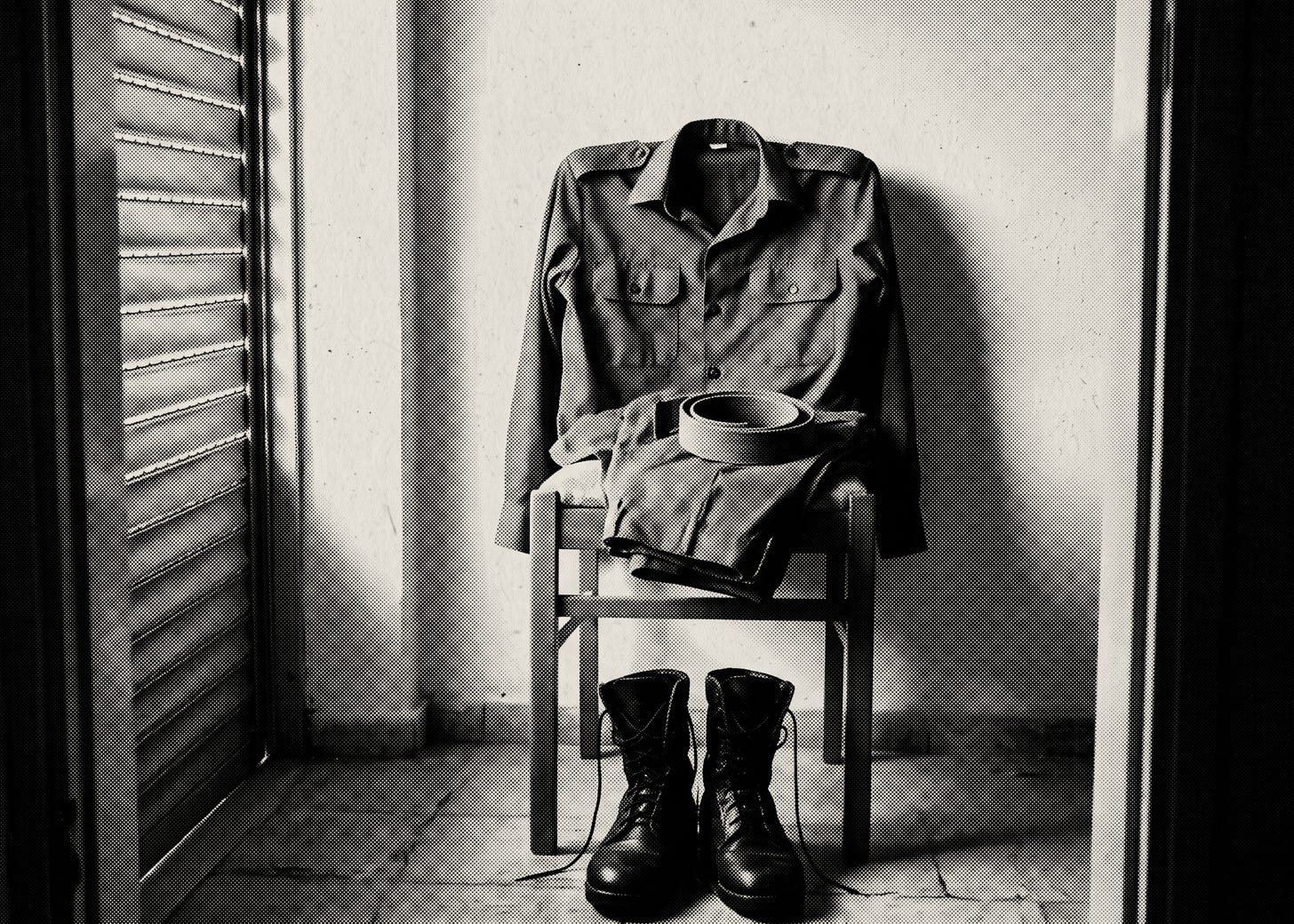
Somewhere in Israel a young man is about to put on a uniform for the first time, and he has come of age hearing that the commanders who will be giving him orders might have let it all happen.
This deep skepticism in the chain of command is the one thing our enemies could never have achieved themselves.
I hope we come to our senses in the new year ahead.
Shabbat shalom and shana tova,
Josh Ben-David
Founder, Daily Lion

Rewriting October to survive the next election
The October treason campaign
Questions over why generals did not wake the prime minister on October 7 have pushed military accountability to the forefront of the election campaign. With more than a third of the public receptive to claims of internal betrayal, the focus has shifted away from government policy to the security establishment itself, leaving future election results vulnerable to charges of institutional sabotage.
Striking down the draft freeze
The High Court struck down the government freeze on arresting Haredi draft evaders, leaving the military short 12,000 soldiers and the coalition without legal cover. Proposing to draft only those who do not study requires attendance tracking the state has never managed to enforce. The coalition gained a campaign rallying cry against the judiciary, but military police must now decide whether to enforce the warrants.
Itamar Ben-Gvir’s succession bid
Itamar Ben-Gvir broke his practice of shielding Benjamin Netanyahu from direct attacks, while rejecting a joint electoral run with Bezalel Smotrich. Splitting the ballot risks dropping Smotrich below the 3.25 percent threshold and forfeiting parliamentary seats. By running alone, Ben-Gvir is betting that distancing himself from a weakened prime minister will let him inherit the nationalist bloc when the current coalition ends.
Likud targets the expat airlift
Tens of thousands of Israelis living abroad are booking flights home to vote in October, relying on private initiatives to bypass the ban on absentee ballots. Likud issued legal warnings claiming subsidized travel violates campaign bribery laws, while organizers argue voter transportation is entirely standard. With up to ten Knesset seats represented by citizens overseas, the courts must now resolve whether charter flights can legally be stopped.
DEEP DIVE
Yair Golan and the math of sixty-one
Rebuilding Labor and Meretz began when Yair Golan drove into the massacre zone on October 7, earning the standing to unite both parties under an agreement that kept their bank accounts separate. Thirty years after the 1993 Oslo Accords, the new faction replaced the old peace platform with border walls and preemptive strikes, while antiwar activists copied settler primary tactics to win top party spots. The dive walks through those mechanics and the arithmetic of a 120-seat parliament, where building a 61-seat majority requires reconciling disillusioned conservatives with Arab factions opposed to demographic separation.

European allies choose between arms and settlement sanctions
Britain prepares settlement trade bans
London is preparing to bar trade with Israeli settlements following new building tenders in the E1 corridor. Distinguishing West Bank goods without universal origin labels threatens to pull broader Israeli commerce into the restrictions, while Palestinian factory workers face job losses if plants relocate. British ministers must balance international legal obligations against warnings that sweeping measures will fuel boycotts at home.
Sanctioning a NATO allied bank
The United States Treasury designated a small Istanbul investment firm for moving Iranian oil revenue, breaching the financial deference usually granted to a NATO ally. Going after a boutique lender lets Washington penalize Iranian shadow banking without collapsing the Turkish lira. Yet with Iran facing record inflation and threatening to disrupt Gulf shipping, incremental financial pressure risks provoking retaliation before talks can resume.
Preempting Turkish radar in Syria
Israeli jets struck an airbase in northern Syria to preempt planned Turkish radar and drone deployments, bringing two regional powers into direct friction. The doctrine of unilateral preventive strikes was built against Iranian militias, not a NATO military partnering with Damascus under American supervision. Without a diplomatic coordination channel in place, routine air defense red lines now risk triggering an interstate clash.
Europe buys the Israeli shield
Germany tested an Israeli ballistic missile in the North Atlantic, part of over 15 billion euros in European air defense purchases from Israel over five years. While European publics largely disapprove of Israel and push for Palestinian recognition, frontline states facing Russian or Turkish threats cannot wait for domestic arms production. Political censure in European capitals now runs directly into dependence on Israeli military technology.
DEEP DIVE
Testing the American financial shield around Israeli leaders
The dispute over arrest warrants for Israeli leaders reaches back to the 2002 law authorizing an American president to use any means to free detained allies. Under Executive Order 14203, Washington bypassed diplomatic debate and cut court personnel off from dollar transactions, leaving judges unable to collect salaries, clear health insurance claims, or keep digital books. The dive walks through the mechanics of secondary sanctions, the assembly vote that fired the chief prosecutor, and the clash over whether a treaty can bind citizens of countries that never joined it. It tracks why European capitals left their banks unprotected against American orders, and what happens when global courts collide with the dollar.

Extracting commanders and clearing the subterranean fortresses
Clearing the Ali al-Taher ridge
Israeli forces took operational control of the Ali al-Taher ridge above and below ground, ending a summer-long siege of Hezbollah tunnels overlooking Nabatieh. The slow encirclement avoided the heavy assault that risked triggering direct Iranian retaliation. Taking the high ground eliminates a fortified redoubt, but leaving the broader border quiet depends on whether piecemeal clearance provokes the wider fight it was designed to prevent.
Extracting the internal security chief
An undercover raid into Gaza City captured Hamas internal security chief Moain al-Arabid, backed by 16 fighter jets and airstrikes that killed four Palestinians. The operation proves special forces can reach deep inside urban centers without launching a full division-scale offensive. Snatching key commanders yields intelligence, but individual extractions cannot resolve the deadlock between demands for complete disarmament and calls to end the fighting.
Who controls the West Bank outposts
Deadly clashes in the West Bank and 660 attacks by Jewish extremists in six months have pushed the military command into a direct confrontation with unauthorized outposts. Senior commanders warn vigilante violence harms strategic ties with Jordan and weakens local security coordination. Yet the army also relies on forward positions and physical barriers to secure the eastern border, leaving soldiers caught between policing illegal outposts and defending strategic depth.
DEEP DIVE
Vertical launch silos and the naval pivot
The newest submarine left its German shipyard with an enlarged sail and a 140 million euro redesign, years after work was halted to cut open the hull. Standard torpedo tubes restrict missiles to narrow diameters and horizontal ejections. Building vertical silos into the tower alters what a submerged vessel can launch and how quickly weapons reach distant targets, but it also reignites a fight over whether the navy should share long-range strike duties with the air force. The dive walks the German subsidies funding the hulls, the corruption inquiry that shadowed the sixth boat, and the compromise with bereaved families over a lost ship’s name.

Sanctions, boycotts and limits of civic protection
Diplomatic rupture and British Jewry
Britain banned imports from Israeli settlements, and Israel retaliated by shuttering the British consulate in Jerusalem and barring diplomats. The clash leaves British Jewish institutions caught between their own government and Israel. On the left, penalizing settlement goods enforces international law against territorial control. From the center, targeting trade risks feeding a wider boycott that spills into communal life. Neither government has signaled room to back down.
Draft evaders at the airport
Border police arrested dozens of draft-eligible yeshiva students at Ben Gurion Airport ahead of the annual pilgrimage to Uman. The arrests turn departure gates into the front line of conscription. On the right, demographic growth makes universal service a basic economic requirement. From the center, mass detentions risk deepening religious alienation without producing soldiers. Over twenty thousand travelers are booked to fly, and the flights leave within days.
Municipal patronage and anti-Zionism
A mayoral visit to a Brooklyn Judaica store sparked an angry dispute over whether Orthodox institutions should welcome hostile city officials. The dilemma is practical: Hasidic neighborhoods rely on City Hall for school and policing funds, even as municipal leaders cut ties with Israel. On the right, staging photo ops shields politicians who fuel anti-Zionism. From the center, cutting ties with local government risks abandoning the social services yeshivas need.
Legislating against campus boycotts
The House passed a bill stripping federal funding from universities that join commercial boycotts against Israel. Supporters argue taxpayer dollars should never subsidize discrimination against Israeli scholars and institutions. Opponents warn that classifying political boycotts as commercial activity violates free speech protections. Because the measure also shields businesses operating across the Green Line, the fight over campus speech doubles as a fight over American recognition of West Bank settlements.
Gloria Steinem and Jewish feminism
Gloria Steinem died at 92, leaving a model of Jewish identity built outside religious institutions. Raised in poverty without formal observance, she grounded her Jewishness in an awareness of vulnerability, answering antisemitism through universal civil rights organizing and feminist Passover seders. That path offered secular Jews a way to connect ancestral heritage to political action, showing how communal memory can survive without traditional belief.
DEEP DIVE
What happens when political firewalls finally collapse
German Jewish life was rebuilt after 1945 on a formal legal compact with the state, rooted in nineteenth-century Prussian rules that turned congregations into public corporations. Under that system, Berlin collects religious taxes and funds community institutions through national treaties, while state interior ministries command the police details stationed outside synagogues. The dive walks that administrative machinery down to the regional level, tracing how election victories by the nationalist right place local security budgets, school curricula, and provenance research under political review. It reaches back to the 2003 agreement that integrated Soviet immigrants, examining what happens when a community’s physical protection depends entirely on provincial election results.
More interesting pieces this week
Miliband has decisively broken with decades of UK inaction on Palestine - Middle East Eye Opinion
Why the Trump Administration is Pushing States to Quit the ICC, and How Member States Can Push Back - Just Security
Israel claims control of Ali al Taher after weeks of Hezbollah attacks and failed handover efforts - Long War Journal
Democrats hold primaries as Likud delays vote on their own - BICOM
Turkey’s Bank for Iran’s Oil - Middle East Forum
Thanks for reading! This newsletter is public so feel free to share it with a friend.
Daily Lion is a podcast platform for people who want to hear all sides of Israel. Learn more about us here: www.dailylionmedia.com