


Founder’s note
Ten years ago, Elor Azaria was a soldier in Hebron when he shot Abdel Fattah al-Sharif in the head. Al-Sharif had just stabbed an IDF soldier, and he’d been shot by a different soldier and was lying incapacitated on the road.
A military court convicted Azaria of manslaughter. He served nine months of an 18-month sentence and was released in 2018. The conviction would have stayed on his record until 2032. This July, Defense Minister Israel Katz asked President Herzog to clear it, and on the eve of Yom Kippur, the president erased Elor Azaria’s criminal record. Herzog said he did it “in the spirit of the season of mercy.”
The right in this country sees this as a correction that’s long overdue. Its case is that a 19-year-old making a decision on the battlefield shouldn’t be thinking about the courtroom. Rules written to keep the army moral have turned into hesitation and fear, and some on the right go further and say that hesitation helped open the door on October 7th. In their reading, erasing Azaria’s record tells every soldier that when they act to protect Israeli lives, the country will stand behind them.
The IDF leadership sees it differently. Chief of Staff Eyal Zamir put his opposition in writing, along with the head of the Personnel Directorate and a senior military lawyer. Their reason was simple: Azaria broke the army’s ethical code of conduct and its explicit orders, and he has never expressed remorse. A soldier who breaks an order and is forgiven, over his commander’s head, teaches every other soldier that an order is a suggestion. To them, discipline and the rules of engagement aren’t simply signs hanging on a basic training classroom wall, they’re what makes the chain of command work, and they’re a big part of why the world still takes our word about how we fight. Once politicians and even the president decide which convictions stand, military justice becomes a matter of political affiliation.
Then there’s the president’s own reasoning. A decade of division is enough, he said. Azaria paid the price, and keeping a record over him only keeps the wound open, at a time when we need national healing more than ever. His critics answer that Yom Kippur forgives someone who asks to be forgiven, and Azaria never asked. He’s said that he’d do exactly the same thing again.
Each of these camps has a truly valid point. Soldiers do need to know the country is behind them. The chain of command does need to hold and to be respected. And ten years is a long time to carry a record for a sentence you’ve already served.
But step back from Azaria and look at the direction we’re headed. Ten years ago, the chief of staff said plainly that what happened in Hebron wasn’t the IDF and wasn’t its values. Since then, and especially since October 7, the country has been moving to the right, and in this case that means the IDF is being pulled away from its own rulebook.
That rulebook is something we’ve been proud of as a country for a long time. Israelis grew up hearing that the IDF is the most moral army in the world, and there’s good reason for it. Few armies have to tell terrorists apart from civilians in the same city, on the same street, in the same house, and fewer write rules as demanding as ours to do it.
The claim was never just a slogan. It is deeply embedded in our military doctrine. It is true.
But it remains true only as long as we enforce those rules on our own soldiers, including when it’s unpopular. If we keep loosening that, we’ll lose the claim, and that would be a terrible loss, for the country and for the way we see ourselves.
None of this means leaving soldiers to second-guess themselves in the field. They need to be able to act fast, and to know the country trusts them. But what protects a soldier from second-guessing isn’t erasing the line after someone crosses it. It’s drawing a line that doesn’t move.
We can protect our soldiers, and we can keep our morality. We only lose one of them if we stop insisting on both.
Shabbat shalom,
Josh Ben-David
Founder, Daily Lion
Stories we covered this week
Eisenkot struggles against Likud campaign framing. Both major parties are stuck at twenty percent in the polls. The opposition can’t agree on a leader, and the coalition says any alternative needs anti-Zionist votes. That leaves the parliamentary math frozen. Neither side is inspiring the swing voters they need.
Jewish parties disqualify Arab political slates. The election committee voted to ban major Arab parties from the ballot. Supporters say lawmakers who praise attacks shouldn’t hold office. Critics call it a stunt that ignores far-right incitement. Now it’s up to the Supreme Court to decide who runs.
Netanyahu turns UN address into rally. The prime minister flew to New York for six hours just weeks before the vote. His camp saw a leader telling hard truths to foreign critics. Opponents saw pure campaign theater meant to hide growing diplomatic isolation. It’s all for voters here.
Miki Zohar changes Israeli cinema subsidy rules. The culture ministry reworked how films get funded. They froze ninety million shekels and revived an old censorship board. The government wants to stop funding treason. Filmmakers say it’s destroying an industry that relies on European partners to survive.
Division redeployment to the West Bank. The military moved a whole division to the territories after a wave of lethal attacks. Some blame Jewish extremists for pulling troops away from the borders. Others say that’s ignoring the organized terror cells those soldiers must fight.
Die Linke victory alarms Berlin Jews. A left-wing party just won a quarter of the vote in Berlin. Jewish groups want them kept out of city hall. The party insists opposing our military operations isn’t antisemitism. Mainstream leaders now face a tough choice about who gets to govern.
Armed guards after the Belleville attack. Police stopped an armed attacker outside an Ontario synagogue on Yom Kippur. Jewish leaders across North America are demanding dedicated guards and protest buffer zones. Security advocates say we need armed protection. Civil liberties groups warn we’re turning community life into fortresses.
🎧 Gain a deeper understanding of these stories and more in the Daily Lion app. We cover Israeli politics, foreign affairs, security, and the Jewish people — from all sides — in one podcast episode per day.
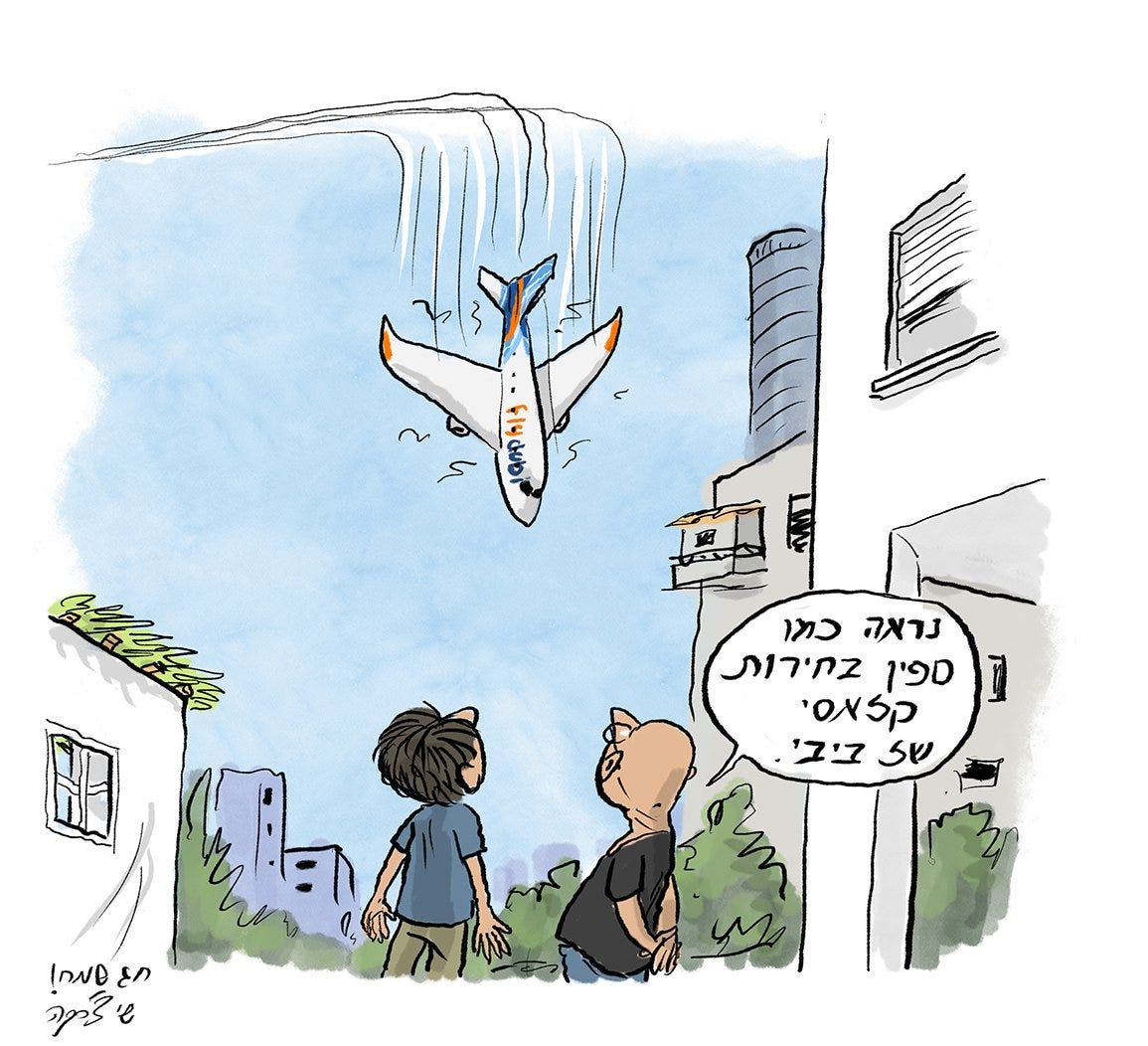
State of the art
Thanks for reading! If you enjoyed this newsletter, feel free to support our work by sharing it with your friends.
Daily Lion is a podcast platform for people who want to hear all sides of Israel. We read 80+ reputable publications from the left, right, and center each week and distill the commentary into digestible podcasts on the topics you care about. Learn more about us here: www.dailylionmedia.com