

On the morning of May 14th, 1948, the Declaration of Independence was still stuck on one word. Rabbi Yehuda Leib Fishman-Maimon wanted it to name God, as “the Rock of Israel and its Redeemer”. Aharon Zisling of the socialist Mapam party wouldn’t sign a text that called on a God he didn’t believe in. Shabbat would begin that evening and the British would leave at midnight, so Ben-Gurion had only a few hours to find a word both men could live with.
In the end the rabbi gave up “Redeemer” and kept “Rock of Israel” instead. A religious Jew reads it as God. A secular Jew can read it as the strength of the Jewish people. At four that afternoon the signing began at the Tel Aviv Museum, and the names on that famous scroll run from the Communist Meir Vilner to Rabbi Yitzhak-Meir Levin of Agudat Yisrael. They agreed on almost nothing before. They agreed on the State of Israel now.
Seventy-eight years later, our party leaders made promises of their own, but on Tuesday the vote made some of them impossible to keep.
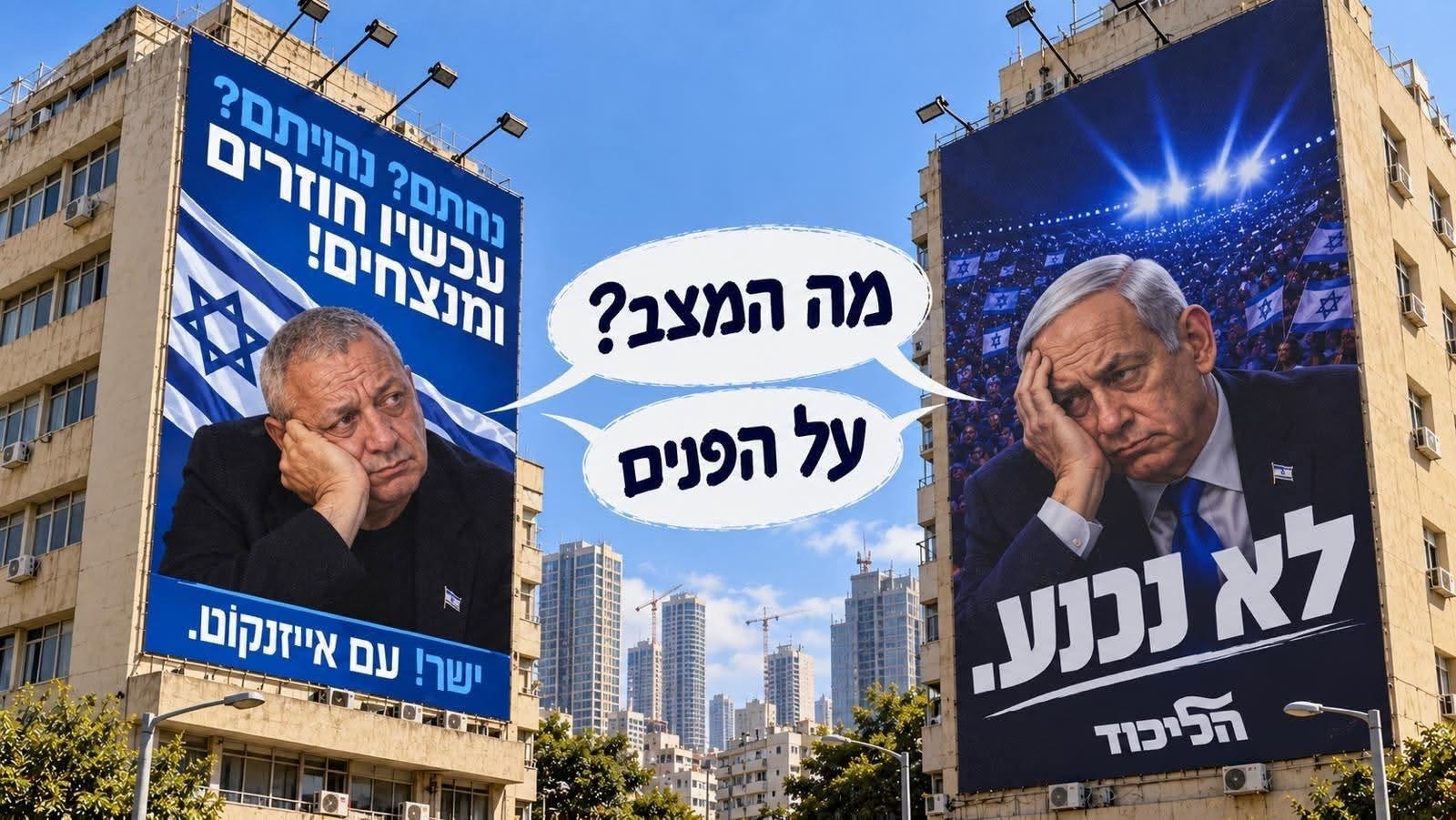
Netanyahu’s bloc won 53 seats, the change bloc 48 and the Arab parties 19. Nobody has the 61 it takes to govern. The change bloc’s leaders all promised never to sit under Netanyahu, and Eisenkot went furthest, “not even in a rotation”. Most of them also promised not to rely on the Arab parties. On the other side, Netanyahu has accused Golan, who leads the Democrats, of “incitement against our heroic soldiers and the state”, and the night before the vote he called working with the Arab parties “a disgrace”. That’s only a small taste of what the camps threw at each other over the months of the campaign. Since the count, none of them has taken a word back.
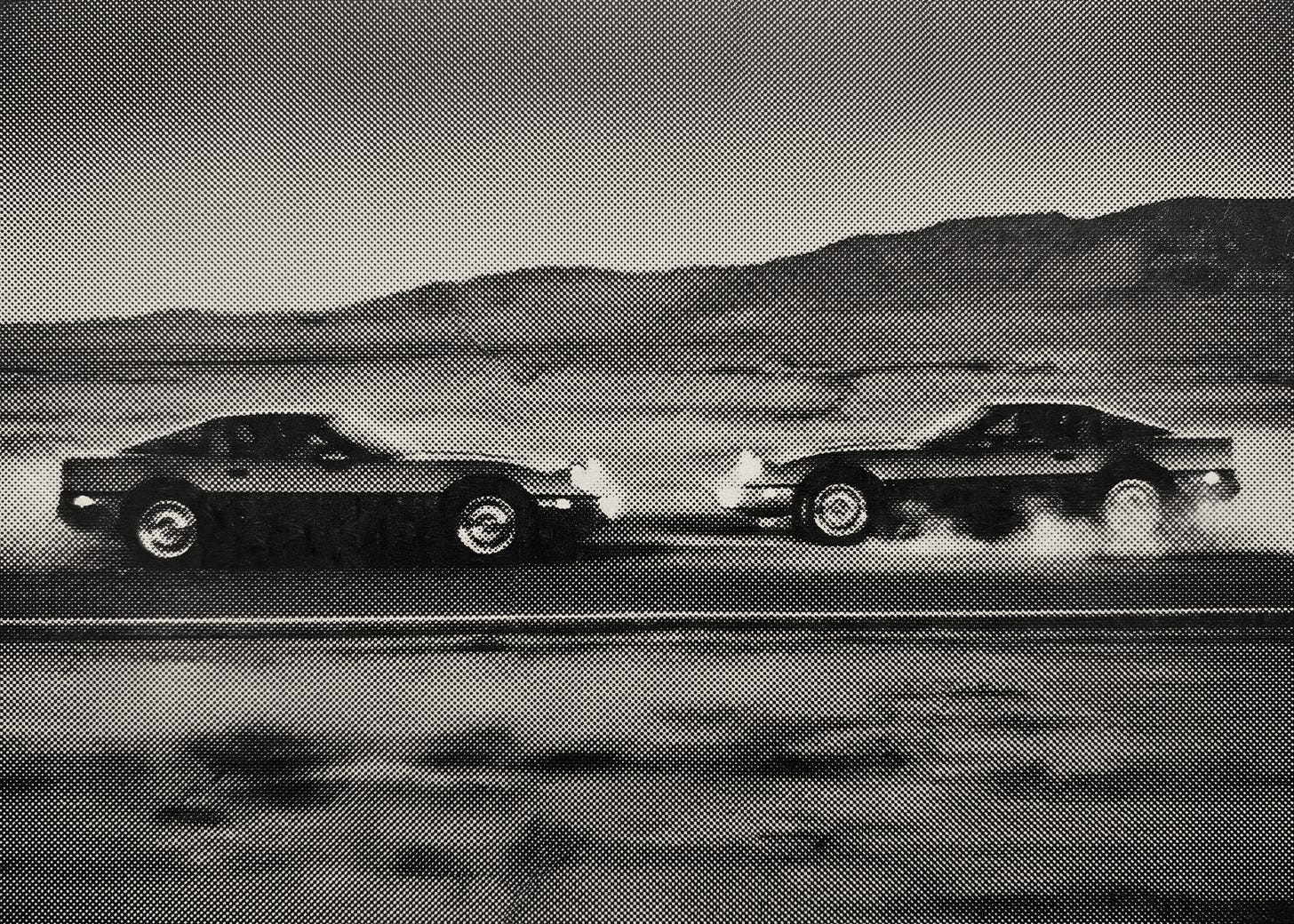
It’s tempting to chalk this up to stubbornness and ego. It isn’t, and in 1960 the economist Thomas Schelling explained why with the game of chicken. Two drivers race at each other, and whoever swerves first loses. The winning move is to rip off your steering wheel and throw it out the window where the other driver can see it. Now he has to swerve. A promise you can’t take back works the same way. It tells voters what they’re getting and tells rivals not to bother asking. But when every driver throws out their wheel, nobody can swerve, and the crash is a seventh election in seven years.
The leaders are only half the problem, though. The other half is us. Nicolas de Condorcet showed that a public can prefer A to B, B to C and C to A. Whatever it picks, some other majority would rather have something else. In June, 59% of Israelis said Netanyahu shouldn’t run again. This month, 71% of Jewish Israelis said they want a state commission of inquiry into October 7th, and 72% want the Haredim drafted equally. Those majorities point toward the change bloc. But 59% of us oppose an Arab party in the coalition, 53% are fine with a Haredi one, and only a quarter of Jewish Israelis support talks with the Palestinians. Those point toward Netanyahu’s bloc. Every camp has a majority behind it, but no government can honor them all. Counted issue by issue, this election never ends.
There’s something else the count hides. Freud wrote about what he called the narcissism of small differences. The fiercest contempt, he noticed, runs between neighbors who are almost alike. Listen back to this campaign. The bitterest lines weren’t aimed at the parties furthest away. They were aimed at the parties next door.
To get ourselves out of this mess, we must stop counting issue by issue. Underneath all those individual policy majorities lies a bigger one, but it isn’t a policy. It’s the very reason this country exists: to be a sovereign and democratic state for the Jewish people in our ancestral homeland. Count the Knesset that way and bloc lines disappear. Likud, Otzma Yehudit, and Religious Zionism are Zionist parties. So is Shas, which in 2010 became the first Haredi party to join the World Zionist Organization. So are Yashar, B’Yachad, Yisrael Beytenu, and the Democrats. Together they hold 94 of the Knesset’s 120 seats. That’s the biggest majority we have, and it runs straight through both blocs.
And here’s what nobody said during the campaign. For Netanyahu’s bloc, Zionism means holding the land, keeping the IDF strong, and never again waiting for the world’s permission. Most of the change bloc believes exactly the same. For them, Zionism also means a state where everyone serves, and plenty of Netanyahu’s voters want that too. Each side shares far more of the other’s Zionism than either campaign would ever admit.
What it asks of us is a broad Zionist government. I don’t mean a unity government like the rotation Netanyahu and Gantz signed in 2020, which fell apart before Gantz’s turn ever came. I mean a stable government of the main parties in the middle, the ones that agree on what the state is for, with enough seats to survive a bad week. To make it easier to build, it may have to leave out the far ends of both sides. That’s fine. A party left outside has every reason to move toward the middle to get back in, and that would be very good for the country.
Schelling had another point. He asked his students where they’d meet a stranger in New York if they had no way to talk first. Most said Grand Central, at noon. Nobody had agreed on it. It was simply the place everyone knew. When people find it hard to agree, they can meet on shared ground. On May 14th, 1948, that was the Rock of Israel.
Getting there means some leaders will have to break a campaign promise. The parties of the Zionist majority agree on far more than Fishman-Maimon and Zisling ever did. We can follow Ben-Gurion’s lead from that morning, start from the words we share and govern from there.
Shabbat shalom,
Josh Ben-David
Founder, Daily Lion
State of the art
Daily Lion is a media platform about Israel and the Jewish people that takes the most important stories of the moment, and lays them out how the left, right, and center see them. Then we add our own perspective and let you decide. Learn more about us here: www.dailylionmedia.com
If Israel could come together and forget party squabbling, the world would be shaken by this tiny country becoming a monolith of strength and resilience, unbreakable and able to function, unlike the shackled warriors the world haters wish us to be.